I’ve always heard about the punk scene in Belfast, but somehow had never thought too deeply into it with regards to the Troubles. However, from talking to my Dad a little more about his youth and those he knew, I’ve realised that the movement played a massive part in keeping the youth of that time occupied (and sane.)
I’ve read an extremely interesting article from The Irish Times regarding the music/culture scene around this time, here’s what I now know; After the outbreak of violence that marked the start of the Troubles in 1969, N.I.’s two biggest cultural hubs, Belfast and Derry, became basically barren in terms of urban life. Those outside of N.I. that usually came to play gigs as part of their tours, just stopped coming, for fear of their safety. As Protestants and Catholics became more divided through segregated living areas etc, people barely left their homes at night out of fear, and even buses stopped running early, as iron fences closed off the city centre past 6pm. Therefore, teens were faced with boredom, and had no escape from their everyday worries of violence and lack of opportunities.
In 1975, three members of the popular Miami Showband were gunned down by loyalist UVF soldiers, which shocked those bother North and South, as it was the first time a band from outside of N.I. had be deliberately targeted. The killings now also discouraged not only outsiders, but also local artists. Northern Ireland’s music scene had almost gone extinct.
From 1977 onwards, although the killings were still ongoing, the streets were relatively safer, and as such this allowed the development of a local version of a new youth culture which was creating a stir overseas… punk.
Nothin’ for us in Belfast
Jake Burns for Stiff Little Fingers: Alternative Ulster (1978)
The Pound’s so old it’s a pity
OK, there’s the Trident in Bangor
Then walk back to the city
We ain’t got nothin’ but they don’t really care
“Musically speaking, punk was an aggressive, fast and minimalist subgenre of rock which appeared in the bars of Manhattan in the 1970s. Greatly indebted to 1960s American garage rock and early 1970s bands such as the Stooges, MC5 and the New York Dolls, punk was also influenced by British beat music and pub rock. But it was more than a music genre: it was a cultural phenomenon which spanned several media – fashion, the visual arts, even literature – and, in the United Kingdom at least, emerged as the most visible youth subculture of the era.”
Northern Irelands youth based their punk look from British tabloids available in Northern Ireland, as the movement wasn’t talked about in N.I.’s main newspapers (they had more important things to write about.) Representations on TV of this new scene was another source of inspo for these teens, to help them learn for to dress, talk and behave. More importantly than any of that, was the music. Music was listened to and produced by amateur groups, and the punk scene grew as they searched for new bands to draw inspiration from. They relied on programmes such as Top of the Pops, word of mouth, posters, music magazines that would review Northern Irish bands and gigs, and radio, most notably the infamous John Peel’s (dj) late evening show on BBC One.
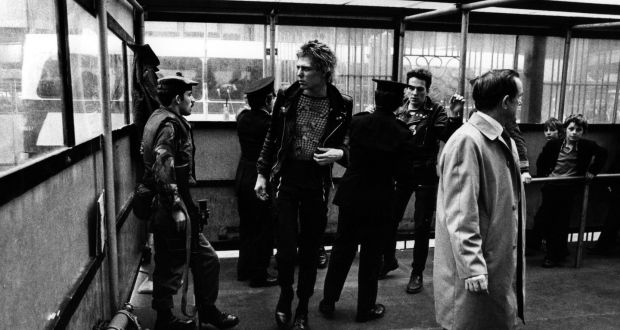
Learning about the punk movement was super inspiring. These kids just needed something, anything, to distract from the pain and worries of everyday life during the Troubles, and punk helped with that. They were given a completely new identity, one that they chose themselves rather than being told. They weren’t Catholic or Protestant. They were Punk.
Source:
https://www.irishtimes.com/culture/books/alternative-ulster-how-punk-took-on-the-troubles-1.2890644
 time to change